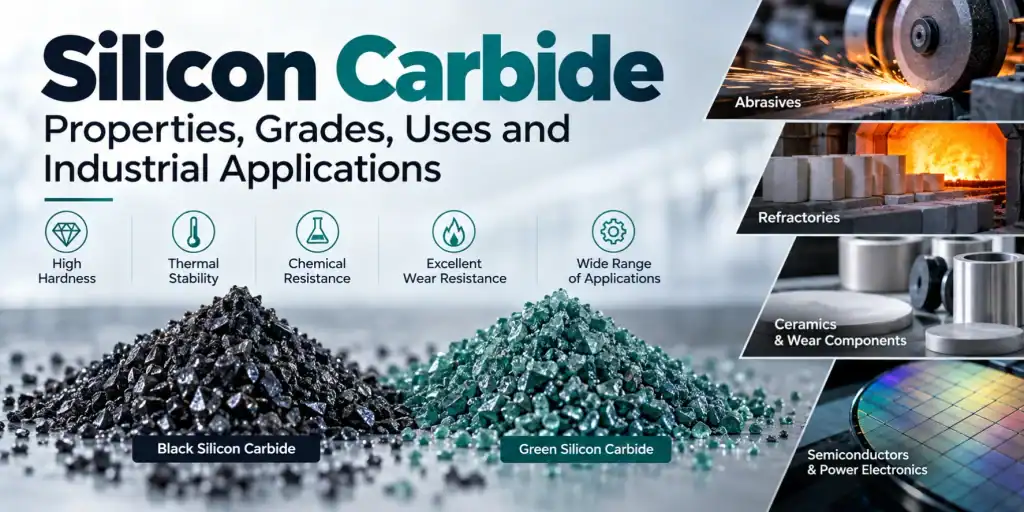
Silicon Carbide (SiC) is one of the most important advanced industrial materials used in abrasives, refractories, metallurgy, ceramics, semiconductor manufacturing, power electronics, and high-temperature applications.
Known for its exceptional hardness, thermal stability, chemical resistance, and high-temperature performance, silicon carbide has become increasingly important across traditional manufacturing as well as rapidly growing technologies such as electric vehicles, renewable energy, and high-efficiency power electronics.
For manufacturers, distributors, and industrial buyers, understanding silicon carbide grades, specifications, applications, and sourcing options is essential for selecting the right material.
What Is Silicon Carbide?
SIC is a compound consisting primarily of silicon and carbon, with the chemical formula SiC.
It is commonly produced by reacting silica-containing materials with carbon at very high temperatures. The resulting material can be processed into different grades, particle sizes, and forms depending on its intended application.
Silicon carbide is often recognized by its combination of:
- Very high hardness
- High thermal conductivity
- Excellent thermal shock resistance
- Low thermal expansion
- Excellent chemical stability
- High-temperature strength
- Abrasion resistance
- Corrosion resistance
These characteristics make SiC suitable for demanding industrial environments where conventional materials may not perform adequately.
Why Is SIC Important?
Silicon carbide has traditionally been associated with abrasive and refractory applications. However, its importance has expanded significantly.
Today, SiC is used in applications ranging from abrasive blasting and grinding wheels to semiconductor wafers and electric vehicle power electronics.
One of the most interesting characteristics of silicon carbide is that the same fundamental material can be processed into very different forms for very different industries.
For example:
Abrasive-grade SiC may be processed into grains and powders for grinding and surface preparation.
Refractory-grade SiC can be incorporated into furnace linings and high-temperature components.
Ceramic-grade SiC can be manufactured into wear-resistant and high-temperature components.
Electronic-grade SiC can be processed into semiconductor substrates and devices.
This broad application base is one reason silicon carbide continues to attract industrial investment.
Key Properties of SIC
1. Exceptional Hardness
SIC is one of the hardest industrial materials available.
Its hardness makes it highly effective for applications involving:
- Grinding
- Cutting
- Surface preparation
- Lapping
- Polishing
- Abrasive blasting
- Wear-resistant components
Because of its hardness, SiC can remove material efficiently from many metals, ceramics, glass, stone, and other hard surfaces.
2. High-Temperature Performance
SIC maintains excellent performance at elevated temperatures.
This makes it useful in:
- Kiln furniture
- Furnace components
- Refractory systems
- Heat exchangers
- Heating elements
- High-temperature ceramics
3. Thermal Conductivity
SIC has relatively high thermal conductivity compared with many conventional ceramics.
This property makes SiC attractive for applications requiring efficient heat transfer or thermal management.
4. Low Thermal Expansion
SIC has a relatively low coefficient of thermal expansion.
As a result, components made from SiC can tolerate significant temperature changes with reduced dimensional instability.
5. Chemical Resistance
SiC offers excellent resistance to many corrosive environments.
This characteristic makes it useful in chemical processing, pumps, mechanical seals, wear components, and other demanding industrial applications.
Types and Grades of Silicon Carbide
SIC is available in different grades depending on purity, manufacturing process, crystal structure, particle size, and intended application.
The most commonly encountered industrial categories include black silicon carbide and green silicon carbide.
Black Silicon Carbide
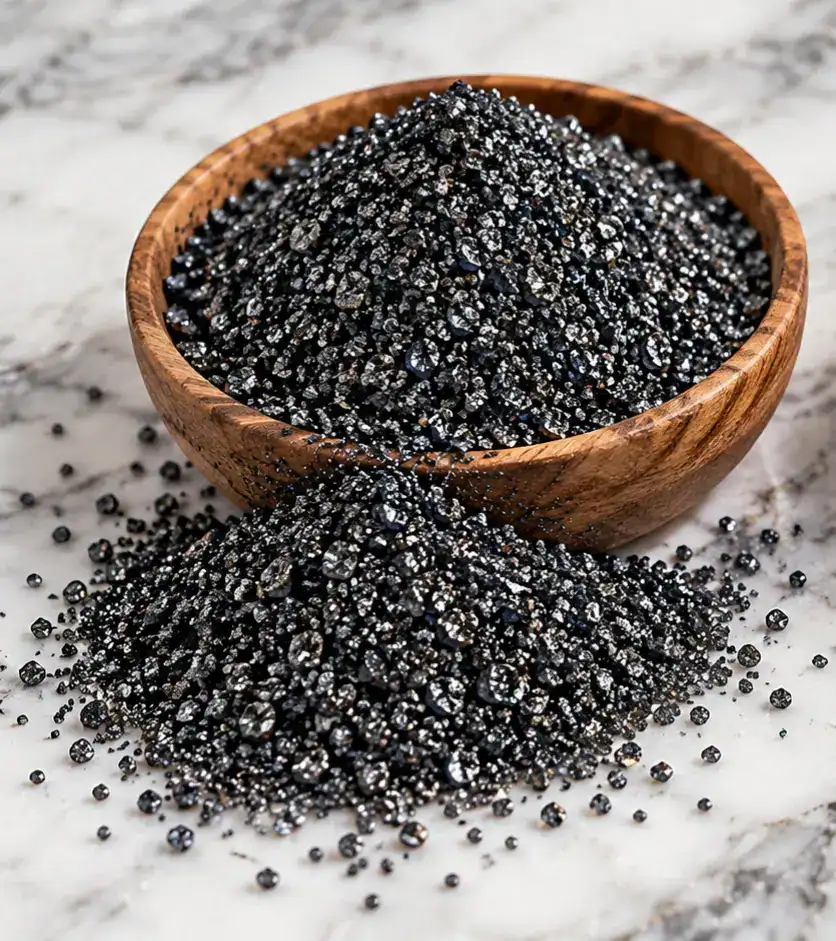
Black SIC is widely used in industrial abrasive applications.
Typical applications include:
- Grinding wheels
- Abrasive blasting
- Coated abrasives
- Refractory products
- Cutting applications
- Surface preparation
- Stone processing
Black SiC is generally selected for applications where a combination of hardness, toughness, and abrasive performance is required.
Green Silicon Carbide
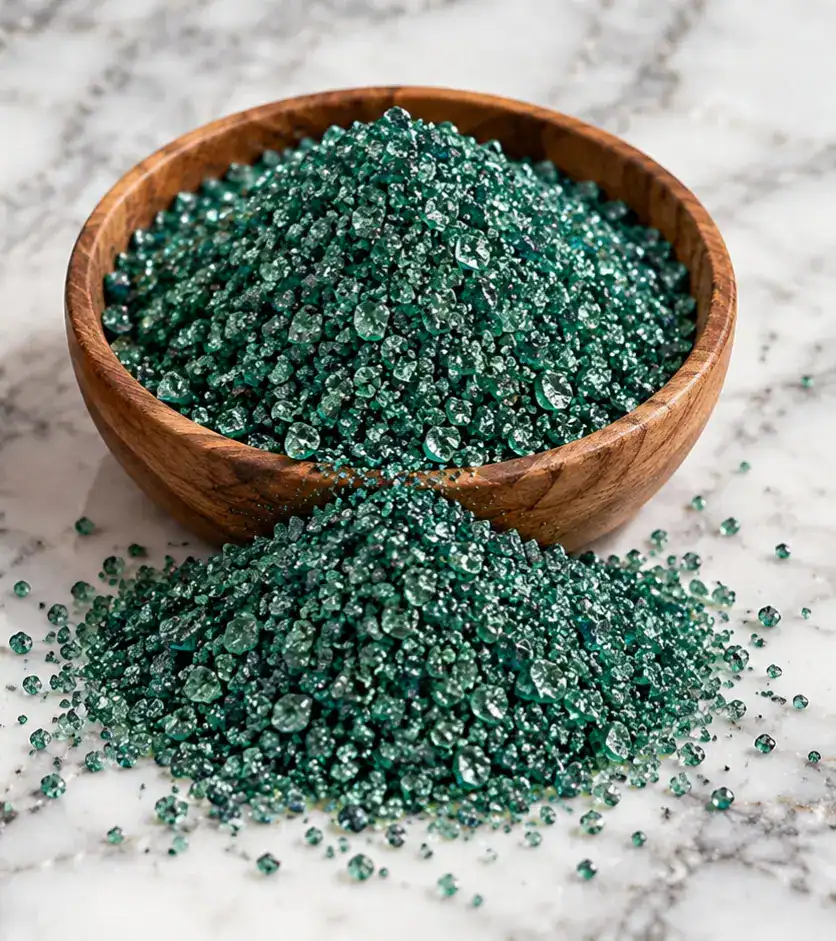
Green SIC generally has higher purity than conventional black silicon carbide and is commonly selected for precision applications.
Typical applications include:
- Precision grinding
- Carbide grinding
- Optical applications
- Ceramics
- Lapping
- Fine abrasive applications
The appropriate grade depends heavily on the application and required purity.
Silicon Carbide Grit Sizes
Silicon carbide is available in a wide range of particle sizes.
Depending on the application, buyers may specify:
- Macro grit
- Fine grit
- Microgrit
- Powder
Common abrasive specifications may be expressed using standards such as FEPA, JIS, ANSI, or other customer-specific specifications.
The required particle size has a significant impact on the final performance.
For example:
Coarse Silicon Carbide
Used for:
- Heavy grinding
- Material removal
- Abrasive blasting
- Surface preparation
- Cutting applications
Medium Silicon Carbide
Used for:
- General grinding
- Surface finishing
- Industrial abrasives
- Stone and ceramic processing
Fine Silicon Carbide
Used for:
- Precision grinding
- Lapping
- Polishing
- Fine finishing
Therefore, industrial buyers should specify both the SiC grade and particle-size distribution when requesting quotations.
2. Refractories
Silicon carbide is widely used in refractory materials because of its high-temperature stability and resistance to thermal shock.
Applications include:
- Furnace linings
- Kiln furnitureMajor Applications of Silicon Carbide1. AbrasivesAbrasives remain one of the largest traditional applications of silicon carbide.SiC abrasive grains are used to manufacture:
- Grinding wheels
- Cutting wheels
- Sandpaper
- Abrasive discs
- Abrasive belts
- Grinding stones
- Blasting media
- Lapping compounds
- Refractory bricks
- Saggers
- Crucibles
- Heat-treatment components
Its thermal properties can help refractory systems withstand severe operating conditions.
3. Metallurgy
Silicon carbide can also be used in metallurgical applications as a source of silicon and carbon.
It may be used for:
- Steel production
- Foundry applications
- Iron treatment
- Deoxidation
- Carbon and silicon adjustment
The specific grade and chemical composition required depend on the metallurgical process.
4. Ceramics
SiC is used to manufacture advanced ceramic components requiring high hardness, thermal stability, and wear resistance.
Applications include:
- Mechanical seals
- Bearings
- Pump components
- Wear plates
- Nozzles
- Furnace components
- Heat exchangers
SIC in Electric Vehicles and Power Electronics
One of the fastest-growing areas of interest in silicon carbide is power electronics.
Silicon carbide is a wide-bandgap semiconductor material.
Compared with conventional silicon-based power electronics, SiC devices can offer advantages such as:
- Higher operating temperatures
- Lower switching losses
- Higher switching frequencies
- Improved power density
- Greater efficiency in certain applications
This makes SiC attractive for applications such as:
- Electric vehicle inverters
- EV charging systems
- Solar inverters
- Energy storage systems
- Industrial motor drives
- Data-center power systems
- Renewable energy equipment
The transition toward electrification and higher-efficiency power systems is therefore creating a major new application area for silicon carbide.
Silicon Carbide for Electric Vehicles
Electric vehicles require highly efficient power conversion systems.
One important component is the inverter, which converts electrical energy between the battery and electric motor.
Silicon carbide power devices can help reduce electrical losses and improve system efficiency.
Potential benefits include:
- Improved vehicle efficiency
- Reduced heat generation
- Smaller cooling systems
- Higher power density
- Potentially faster charging
- Better performance at high voltage
As EV manufacturers and power-electronics companies continue to increase system voltage and efficiency requirements, silicon carbide technology is receiving increasing attention.
Silicon Carbide vs Aluminum Oxide
Silicon carbide and aluminum oxide are two important industrial abrasives, but they are not interchangeable in every application.
| Property | Silicon Carbide | Aluminum Oxide |
|---|---|---|
| Hardness | Very high | High |
| Abrasive character | Sharp and friable | Tough and durable |
| Typical color | Black or green | Brown, white, pink, etc. |
| Grinding behavior | Fast cutting | Longer-lasting abrasive |
| Common applications | Glass, stone, ceramics, non-ferrous metals | Steel, stainless steel, general metals |
| Fine finishing | Excellent | Excellent |
| Refractory applications | Yes | Yes |
The choice should be based on the material being processed, required surface finish, cutting rate, abrasive life, and operating conditions.
Silicon Carbide Manufacturing
Industrial silicon carbide is commonly manufactured through high-temperature processing of silica and carbon-containing raw materials.
The traditional production process involves heating the raw materials to extremely high temperatures.
After production, the material may undergo several processing stages:
- Cooling
- Crushing
- Separation
- Magnetic separation
- Screening
- Classification
- Washing or purification where required
- Final sizing
- Packaging
The manufacturing process can be adjusted depending on whether the material is intended for abrasive, refractory, metallurgical, ceramic, or semiconductor applications.
What Should Buyers Check When Purchasing SIC?
Industrial buyers should not evaluate silicon carbide based solely on price per kilogram.
Important specifications can include:
Chemical Composition
Buyers may request analysis of:
- SiC content
- Free silicon
- Free carbon
- Iron
- Aluminum
- Calcium
- Other impurities
Grit Size
Particle size should be clearly defined according to the applicable standard.
Choosing the right abrasive size is essential for achieving the desired surface finish and blasting performance. If you also work with glass bead abrasives, read our detailed guide on how to choose the right glass bead size for abrasive blasting, including the differences between 30/40, 40/70, and 60/80 glass beads.
Bulk Density
Bulk density can be important for processing, transportation, and formulation calculations.
Particle Distribution
For many applications, particle-size distribution is just as important as nominal grit size.
Color
Color can provide useful information regarding grade and purity, although it should not replace laboratory analysis.
Packaging
Common industrial packaging includes:
- 25 kg bags
- 50 kg bags
- 1 MT jumbo bags
- Customized industrial packaging
Private-label packaging may also be available for distributors and retailers.
Silicon Carbide Sourcing from India
India has an established industrial manufacturing base and can be an important sourcing market for silicon carbide.
Indian suppliers can potentially serve customers in:
- North America
- Europe
- Middle East
- Southeast Asia
- Africa
- Australia
- South America
For international buyers, however, supplier qualification is critical.
Before placing a large order, buyers should evaluate:
- Manufacturing capability
- Production capacity
- Chemical analysis
- Grit consistency
- Quality-control procedures
- Export experience
- Packaging quality
- Lead time
- Port of shipment
- Certifications
- Product samples
A laboratory test report or certificate of analysis should ideally accompany commercial shipments.
How to Choose the Right Supplier
The cheapest quotation is not necessarily the most economical option.
A reliable supplier should be able to provide consistent material from shipment to shipment.
Before selecting a supplier, consider asking for:
1. Product specification sheet
Request complete chemical and physical specifications.
2. Certificate of Analysis
The COA should identify the actual chemical composition and relevant physical properties.
3. Sample
Test the material in your own production process before committing to a large quantity.
4. Production capacity
Confirm that the supplier can maintain your required monthly or annual volume.
5. Packaging options
Discuss standard and private-label packaging requirements.
6. Export documentation
Confirm the supplier can provide the documentation required for your destination market.
7. Quality consistency
For industrial applications, consistency can be more important than a small difference in purchase price.
The Future of Silicon Carbide
The future extends well beyond traditional abrasive applications.
Three areas are particularly important:
Traditional Industrial Demand
Abrasives, refractories, metallurgy, ceramics, and wear-resistant components will continue to require SIC.
Electrification
Electric vehicles, charging infrastructure, renewable energy, and industrial power systems are creating new demand for SiC semiconductor technology.
Advanced Manufacturing
High-temperature ceramics, aerospace, defense, semiconductor manufacturing, and advanced thermal-management applications may create additional opportunities.
This combination of established and emerging applications makes silicon carbide an important strategic industrial material.
Conclusion
Silicon carbide is a versatile high-performance material with applications ranging from conventional abrasives to advanced semiconductor technologies.
Its combination of hardness, thermal stability, chemical resistance, low thermal expansion, and electrical properties makes it valuable across numerous industries.
For industrial buyers, the most important consideration is selecting the correct grade, purity, particle size, specification, and supplier for the intended application.
For exporters and distributors, silicon carbide also represents an interesting industrial-material opportunity because demand spans multiple sectors and geographic markets.
As manufacturing becomes more energy-efficient and industries continue moving toward electrification, high-temperature technologies, and advanced materials, silicon carbide is positioned to remain an important material for decades to come.
Frequently Asked Questions About Silicon Carbide
1. What is silicon carbide used for?
SiC is used in abrasive blasting, grinding wheels, sandpaper, cutting tools, refractory materials, advanced ceramics, wear-resistant components, and semiconductor devices. Its high hardness, thermal stability, and chemical resistance make it suitable for demanding industrial applications.
2. What is the difference between black and green silicon carbide?
Black SIC is commonly used in abrasive blasting, grinding, refractory products, and general industrial applications. Green SIC typically has higher purity and is often selected for precision grinding, carbide processing, and specialized finishing applications. The appropriate grade depends on the required purity, grit size, and end use.
3. Is silicon carbide harder than aluminum oxide?
Yes. SIC is generally harder than aluminum oxide. It is commonly selected for processing hard, brittle materials such as glass, ceramics, stone, and certain non-ferrous metals. Aluminum oxide is tougher and is widely used for grinding and surface preparation of ferrous metals.
4. What grit sizes are available in silicon carbide?
SIC is available in coarse, medium, fine, and micro grit sizes. The exact range depends on the supplier and applicable grading standard, such as FEPA, ANSI, or JIS. Buyers should specify the required grit designation and particle-size distribution when requesting a quotation.
5. Can silicon carbide be used for abrasive blasting?
Yes. SIC can be used as abrasive blasting media for applications requiring aggressive cutting action and efficient surface preparation. It is particularly useful for selected hard surfaces and specialized finishing operations. The correct abrasive should be chosen based on the substrate, desired finish, blasting equipment, and operating conditions.
6. Is silicon carbide suitable for glass and stone processing?
Yes. SIC is widely used in glass grinding, stone processing, ceramic finishing, and other applications involving hard, brittle materials. Selecting the appropriate grit size helps control material removal, surface quality, and processing time.
7. What factors should buyers consider when purchasing silicon carbide?
Buyers should evaluate the silicon carbide grade, chemical composition, grit size, particle-size distribution, impurity levels, packaging, quality consistency, and price. A certificate of analysis and product sample can help verify that the material meets the application’s requirements.
8. What packaging options are available for silicon carbide?
Packaging depends on the supplier, grade, and order quantity. Common options include 25 kg bags, 50 kg bags, and jumbo bags for bulk industrial orders. Customized packaging may also be available for distributors and private-label customers.
9. How should silicon carbide be stored?
Silicon carbide should be stored in a clean, dry environment in sealed or properly closed packaging to prevent contamination and moisture-related handling problems. Keep the material away from incompatible contaminants and follow the supplier’s handling and storage recommendations.
10. How can I choose a reliable silicon carbide supplier?
Look for a supplier that provides clear technical specifications, consistent grit sizing, chemical analysis, suitable packaging, reliable delivery schedules, and export documentation where required. Requesting samples and a certificate of analysis before placing a large order can help reduce sourcing risks.
11. What is the difference between abrasive-grade and semiconductor-grade silicon carbide?
Abrasive-grade SIC is processed into grains and powders for grinding, cutting, and surface finishing. Semiconductor-grade silicon carbide requires highly controlled purity, crystal quality, and manufacturing processes to produce substrates and electronic devices. These grades serve different markets and are not interchangeable.
12. Where can I source silicon carbide for industrial applications?
Industrial buyers can source silicon carbide from qualified abrasive manufacturers, specialty-material suppliers, and industrial distributors. Before purchasing, confirm the required grade, grit size, chemical specifications, packaging, and delivery requirements to ensure the material is suitable for the intended application.
Useful for explaining grit sizes, particle classification, and abrasive standards.
FEPA – Abrasive Grain Standards : Visit FEPA website
An authoritative technical reference for mechanical and thermal properties of silicon carbide ceramics.
NIST – Silicon Carbide Material Properties :View NIST material data