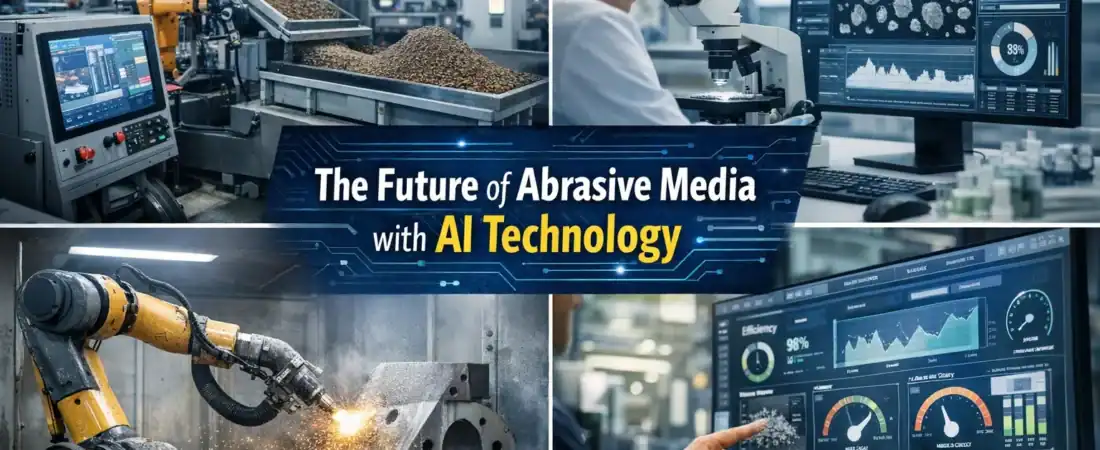
The abrasive media industry is entering a new era. What was once driven mainly by manual expertise, trial-and-error processes, and traditional manufacturing methods is now being reshaped by Artificial Intelligence (AI), automation, and data-driven systems.
From smart blasting systems to AI-powered quality control, technology is redefining how abrasives are produced, selected, and applied. For manufacturers, distributors, and industrial users, this shift promises higher efficiency, lower costs, better consistency, and improved sustainability.
In this in-depth guide, we explore how AI is shaping the future of abrasive media and why this transformation matters for businesses worldwide.
Understanding Abrasive Media in the Modern Industrial Era
Abrasive media are essential materials used for:
- Surface preparation
- Cleaning and descaling
- Deburring and polishing
- Shot peening
- Rust and paint removal
- Precision finishing
Common abrasive materials include:
- Glass beads
- Aluminum oxide
- Crushed glass
- Garnet
- Steel shot and grit
- Ceramic and plastic media
- Walnut shell and organic abrasives
As a growing manufacturer and exporter of industrial abrasives, Trident Abrasive is actively adopting modern technologies to improve product quality, process efficiency, and customer satisfaction in global markets.
Traditionally, selecting and using abrasives relied heavily on operator experience. However, growing industrial demands now require precision, repeatability, and automation, creating the perfect environment for AI integration.
How AI Is Transforming Abrasive Manufacturing
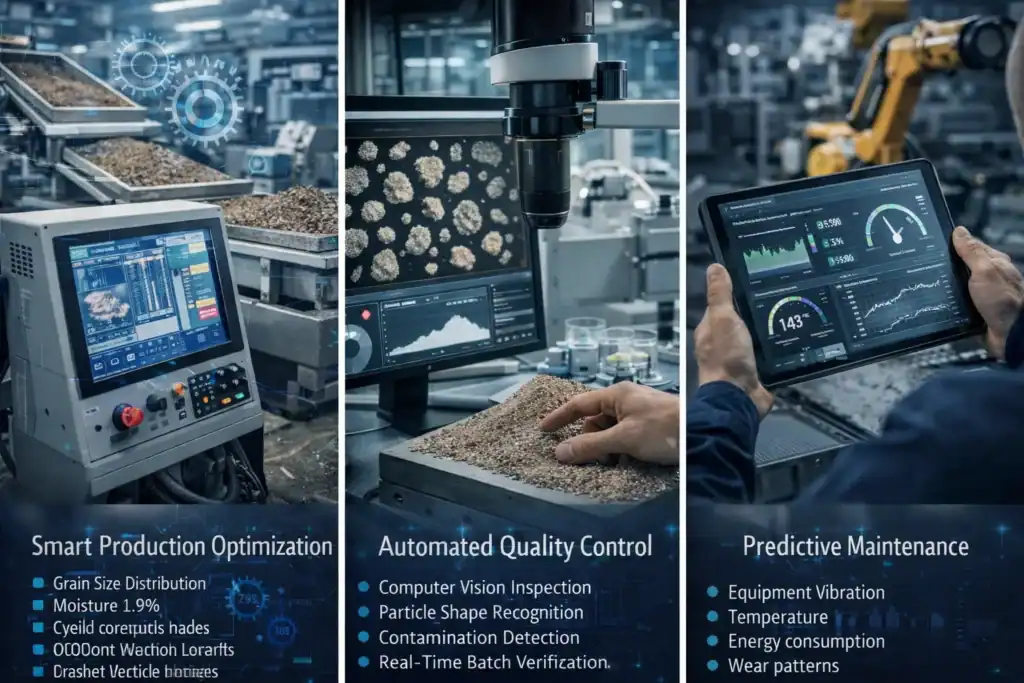
1. Smart Production Optimization
AI-powered systems can analyze production data in real time to:
- Monitor grain size distribution
- Control moisture levels
- Optimize crushing and milling processes
- Maintain uniform hardness and shape
- Reduce material wastage
With machine learning models, manufacturers can predict production issues before they occur—minimizing downtime and improving yield.
2. Automated Quality Control
Traditional quality testing involves manual sampling and lab analysis. AI now enables:
- Computer vision inspection
- Particle shape recognition
- Contamination detection
- Real-time batch verification
High-resolution cameras combined with deep learning algorithms can detect defects invisible to the human eye, ensuring consistent quality across shipments.
3. Predictive Maintenance
AI systems monitor:
- Equipment vibration
- Temperature
- Energy consumption
- Wear patterns
This allows factories to schedule maintenance before failures occur, reducing unplanned shutdowns and extending machinery lifespan.
AI-Powered Blasting and Surface Treatment Systems
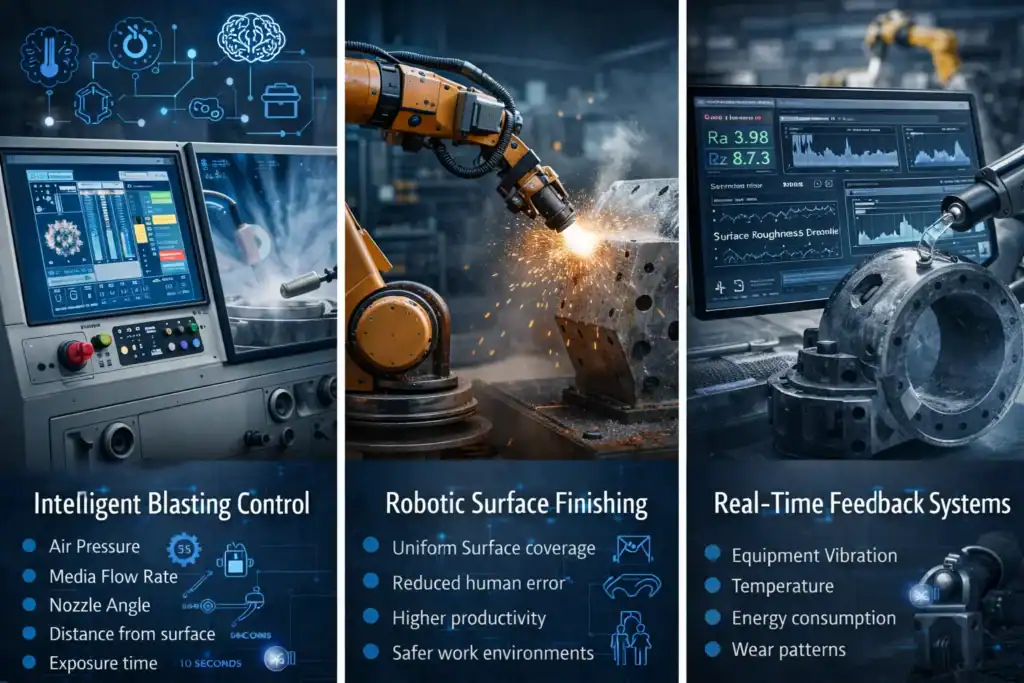
1. Intelligent Blasting Control
Modern blasting systems integrated with AI can automatically adjust:
- Air pressure
- Media flow rate
- Nozzle angle
- Distance from surface
- Exposure time
Based on surface condition analysis, AI selects optimal parameters to achieve perfect finishing without over-blasting.
2. Robotic Surface Finishing
Robotic blasting systems powered by AI offer:
- Uniform surface coverage
- Reduced human error
- Higher productivity
- Safer work environments
These systems are especially useful in automotive, aerospace, shipbuilding, and heavy machinery industries.
3. Real-Time Feedback Systems
Advanced sensors analyze surface roughness (Ra, Rz values) instantly. AI processes this data and adjusts blasting parameters in real time, ensuring consistent results.
Data-Driven Abrasive Selection and Process Optimization
1. Smart Media Recommendation Engines
AI platforms can recommend the best abrasive based on:
- Substrate material
- Surface hardness
- Coating type
- Desired finish
- Environmental regulations
- Budget constraints
Instead of manual guesswork, users receive scientifically optimized solutions.
2. Digital Twins in Surface Treatment
Digital twins are virtual replicas of real blasting systems. AI simulates:
- Media consumption
- Surface outcomes
- Equipment behavior
- Cost scenarios
This helps engineers test multiple setups before implementing them physically.
3. Process Standardization Across Locations
For global manufacturers, AI ensures identical surface finishing standards across factories—whether in Asia, Europe, or North America.
Sustainability and Environmental Impact Through AI
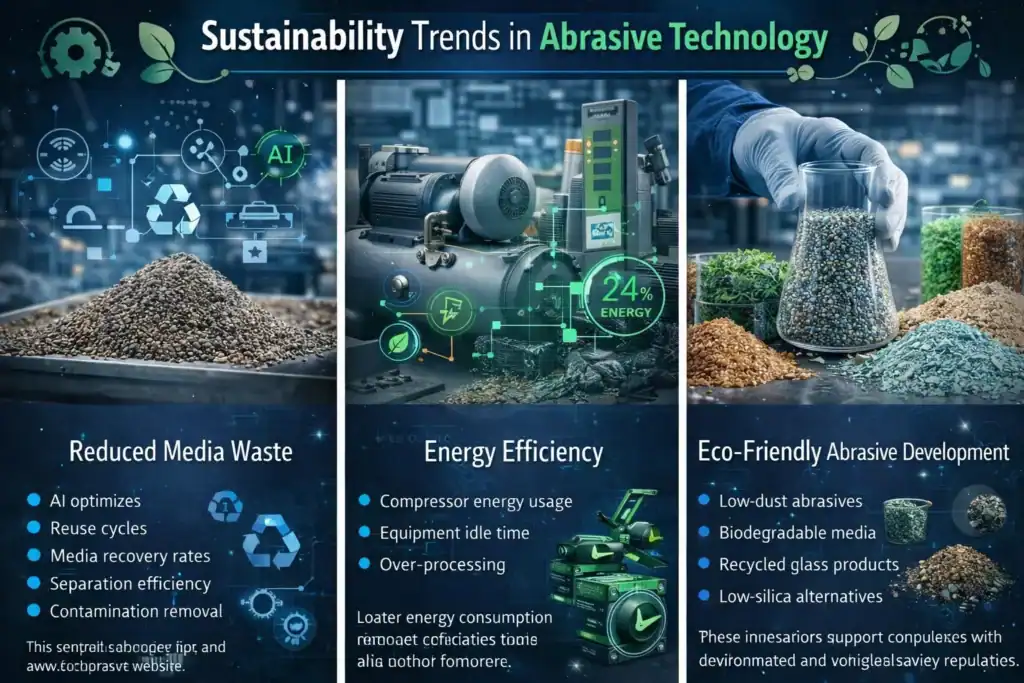
One of the most important trends in abrasive technology is sustainability.
1. Reduced Media Waste
AI optimizes:
- Reuse cycles
- Media recovery rates
- Separation efficiency
- Contamination removal
This extends abrasive life and reduces disposal volume.
2. Energy Efficiency
Smart systems minimize:
- Compressor energy usage
- Equipment idle time
- Over-processing
Lower energy consumption reduces operational costs and carbon footprint.
3. Eco-Friendly Abrasive Development
AI assists in designing:
- Low-dust abrasives
- Biodegradable media
- Recycled glass products
- Low-silica alternatives
These innovations support compliance with environmental and workplace safety regulations.
AI in Supply Chain and Inventory Management
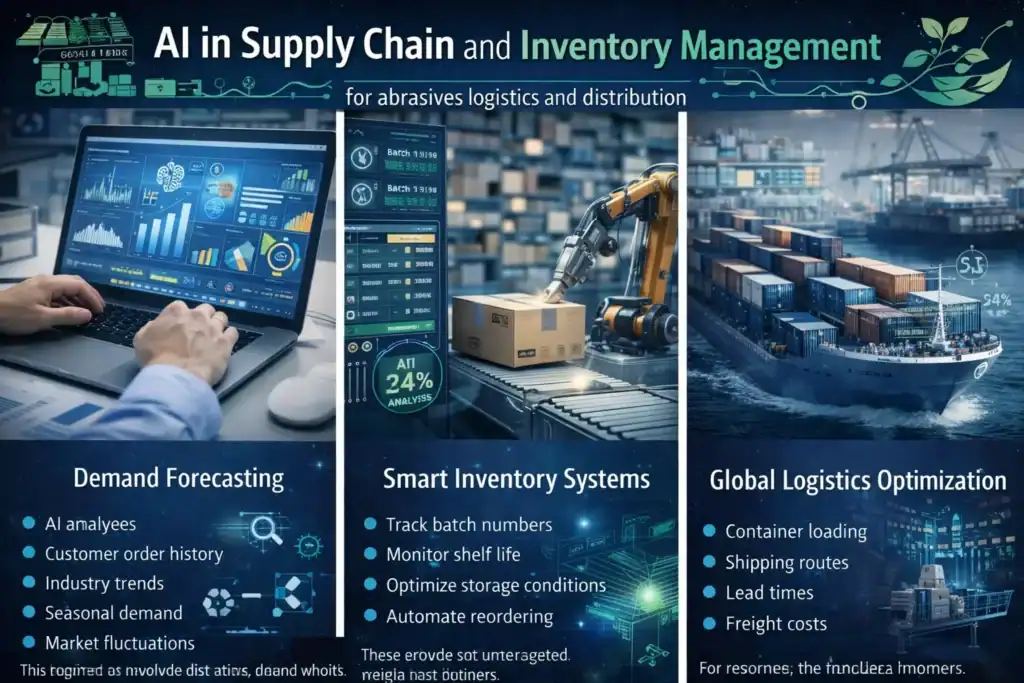
The future of abrasives is not limited to manufacturing—it extends to logistics and distribution.
1. Demand Forecasting
AI analyzes:
- Customer order history
- Industry trends
- Seasonal demand
- Market fluctuations
This improves production planning and reduces overstocking.
2. Smart Inventory Systems
AI-driven warehouses can:
- Track batch numbers
- Monitor shelf life
- Optimize storage conditions
- Automate reordering
This ensures an uninterrupted supply to customers.
3. Global Logistics Optimization
Machine learning models help optimize:
- Container loading
- Shipping routes
- Lead times
- Freight costs
For exporters, this translates into more competitive landed pricing.
The Role of AI in Research and Product Innovation
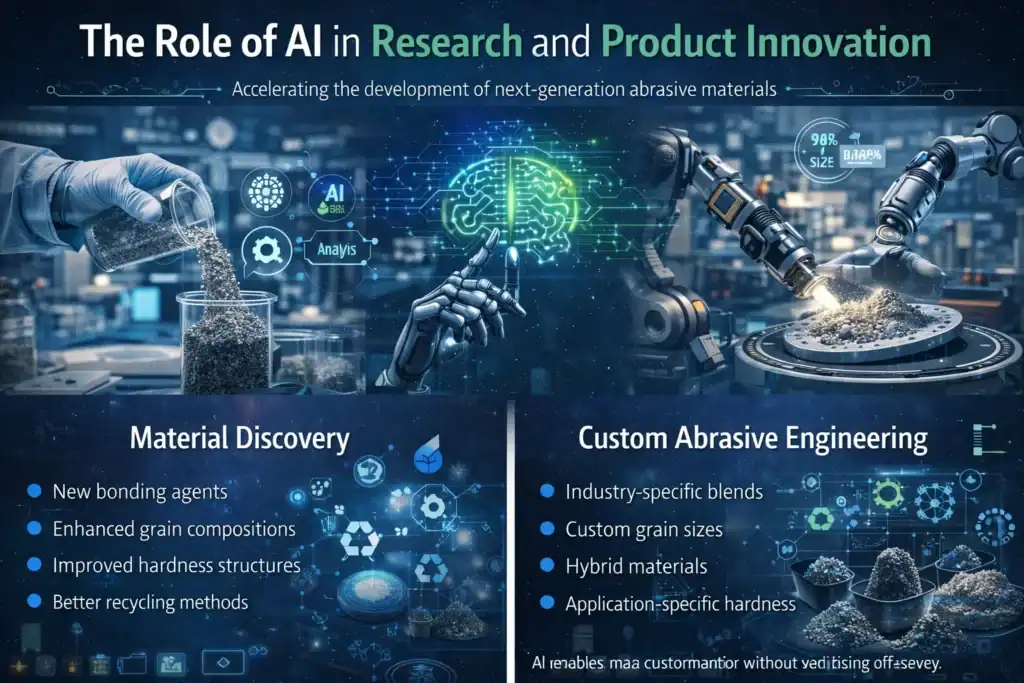
AI is accelerating the development of next-generation abrasive materials.
1. Material Discovery
By analyzing millions of data points, AI helps scientists discover:
- New bonding agents
- Enhanced grain compositions
- Improved hardness structures
- Better recycling methods
2. Custom Abrasive Engineering
Future customers may order abrasives tailored to their exact application, such as:
- Industry-specific blends
- Custom grain sizes
- Hybrid materials
- Application-specific hardness
AI enables mass customization without sacrificing efficiency.
Challenges in Adopting AI in Abrasive Technology
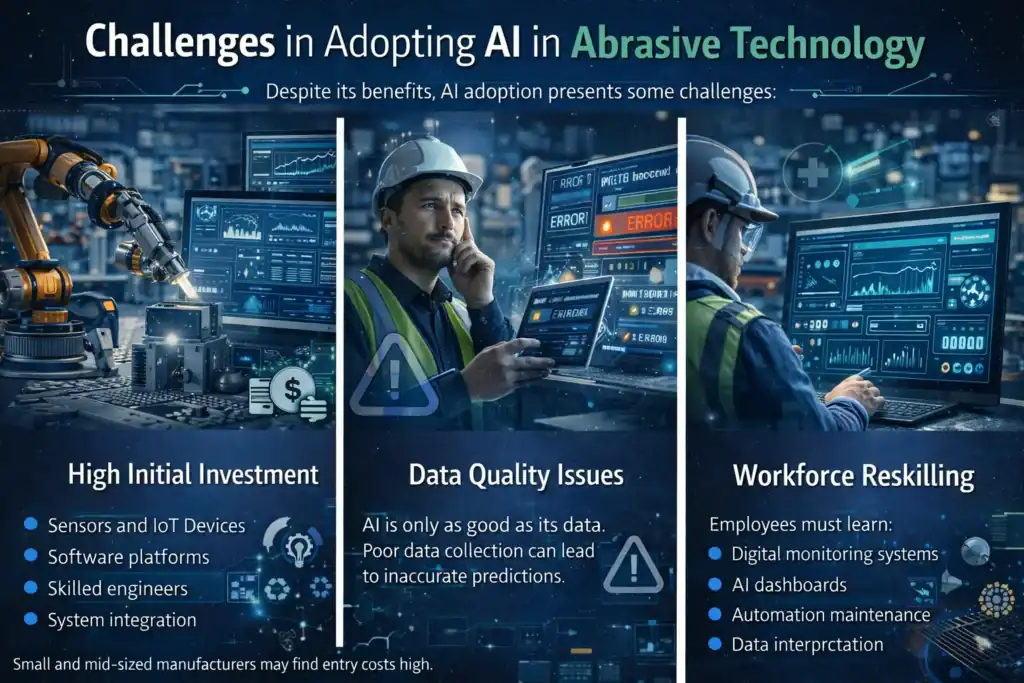
Despite its benefits, AI adoption presents some challenges:
1. High Initial Investment
Implementing AI requires:
- Sensors and IoT devices
- Software platforms
- Skilled engineers
- System integration
Small and mid-sized manufacturers may find entry costs high.
2. Data Quality Issues
AI is only as good as its data. Poor data collection can lead to inaccurate predictions.
3. Workforce Reskilling
Employees must learn:
- Digital monitoring systems
- AI dashboards
- Automation maintenance
- Data interpretation
Continuous training is essential.
Future of Abrasive Media in the next 10 years
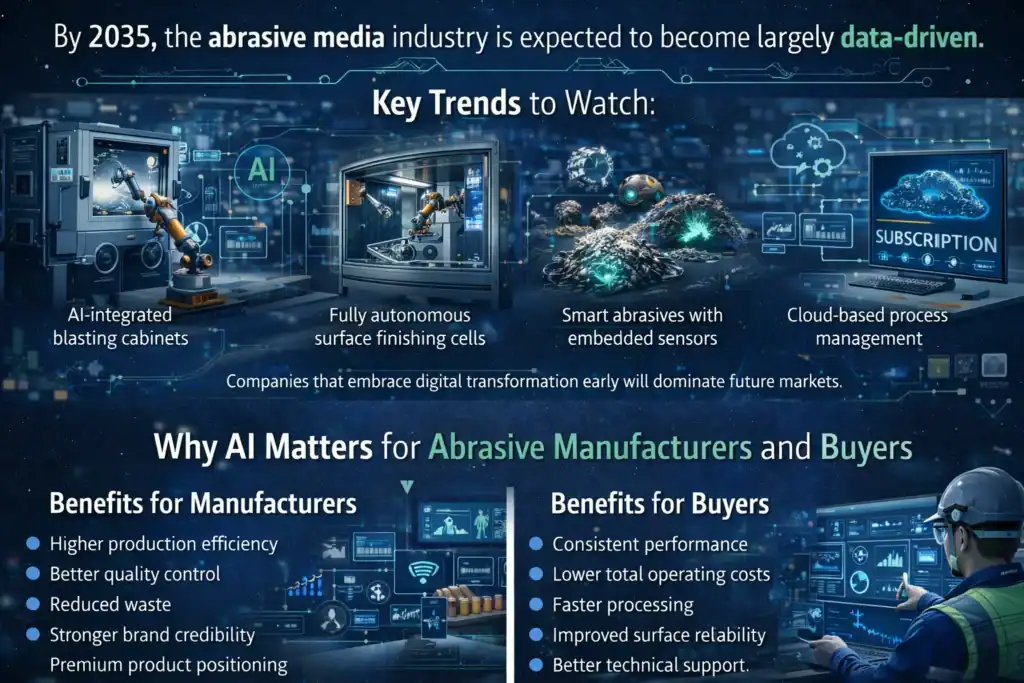
By 2035, the abrasive media industry is expected to become largely data-driven.
Key Trends to Watch:
- AI-integrated blasting cabinets
- Fully autonomous surface finishing cells
- Smart abrasives with embedded sensors
- Cloud-based process management
- Subscription-based optimization software
Companies that embrace digital transformation early will dominate future markets.
Why AI Matters for Abrasive Manufacturers and Buyers
Benefits for Manufacturers
- Higher production efficiency
- Better quality control
- Reduced waste
- Stronger brand credibility
- Premium product positioning
Benefits for Buyers
- Consistent performance
- Lower total operating costs
- Faster processing
- Improved surface reliability
- Better technical support
AI creates a win-win ecosystem across the entire value chain.
The Intelligent Future of Abrasive Media
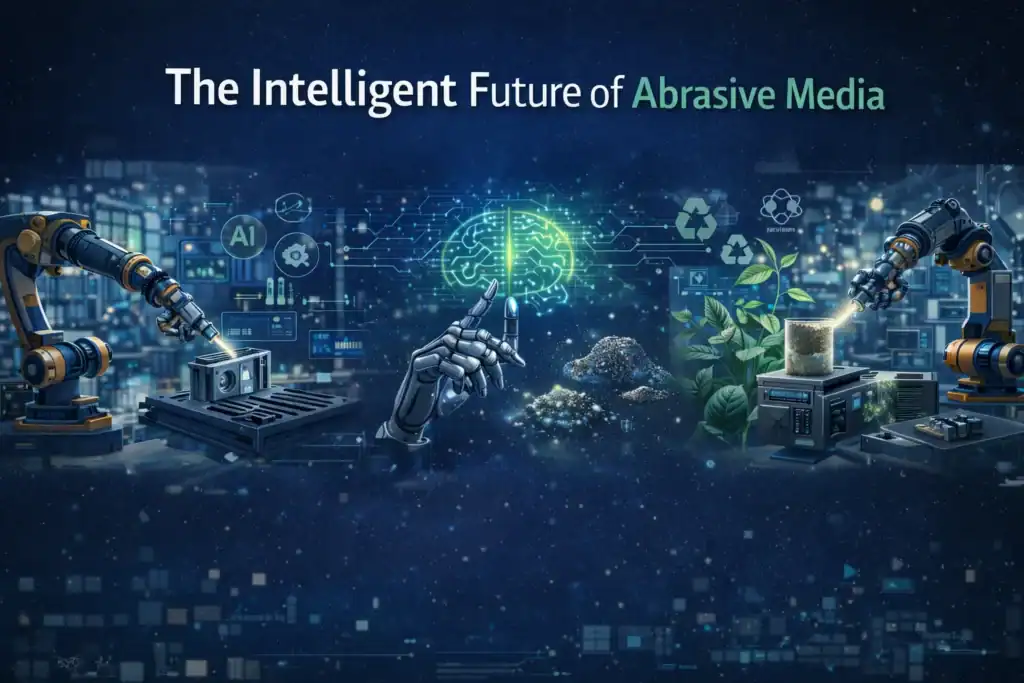
The integration of AI into abrasive media manufacturing and surface finishing is no longer optional—it is inevitable.
From smart production lines and robotic blasting systems to predictive maintenance and sustainable material design, AI is redefining how abrasives are made, used, and distributed.
In the coming decade, companies that combine technical expertise with intelligent systems will lead the global abrasive market. Those who delay digital adoption risk falling behind in efficiency, quality, and competitiveness.
According to IBM’s AI manufacturing research, smart factories are becoming essential for predictive maintenance and quality control.
Companies like Siemens are leading digital twin technology for industrial optimization.
Organizations such as ASTM International help define global standards for abrasive performance and safety.
The future of abrasive media is intelligent, connected, sustainable, and data-driven—and that future has already begun.